
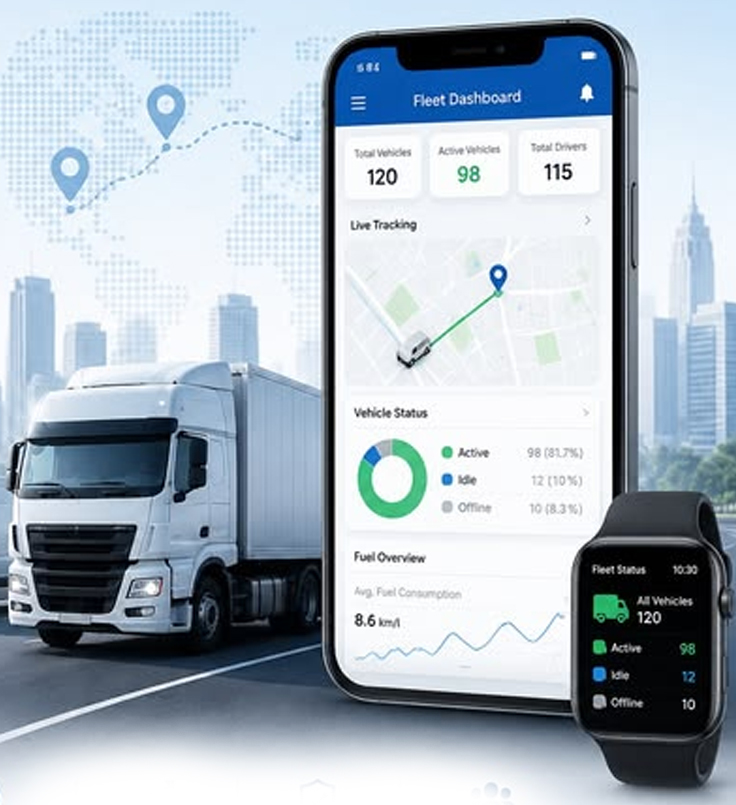
Digital Technology Solutions for Modern Logistics Companies
Logistics is a coordination-intensive business where every shipment, vehicle, driver, warehouse, delivery and payment needs to move according to plan. A delay in one part of the process can affect customers, suppliers, transportation costs and overall profitability.
As logistics businesses expand, managing operations through Excel files, phone calls, paper documents and disconnected applications becomes increasingly difficult. Companies need better visibility across transportation, fleet, shipments, warehouses, deliveries, billing and customer operations.
Tamtech Technology provides digital solutions for logistics companies, transport operators, fleet owners, distributors, courier businesses and third-party logistics providers. The objective is to bring important operational activities into a connected digital environment where teams can manage information, track movement and make faster business decisions.
Logistics Management Software for Connected Operations
Logistics Management Software helps organizations coordinate the movement of goods from booking and dispatch through transportation and final delivery.
A centralized logistics platform can connect shipment information, vehicle allocation, driver details, dispatch records, delivery status, customer information and billing.
This reduces dependence on multiple spreadsheets and manual communication while giving management a more organized view of daily logistics activities.
For businesses handling multiple customers, routes, vehicles and delivery locations, centralized information can also make it easier to identify pending shipments, delayed deliveries and operational exceptions.
Transport Management Software for Freight Operations
Transportation is one of the most important components of logistics.
Transport Management Software can help companies plan trips, allocate vehicles, assign drivers, manage consignments, record freight charges and monitor delivery progress.
A structured transportation workflow can cover the movement from order or booking to dispatch, transit, delivery and settlement.
For multi-branch transport organizations, centralized transport information can also help management monitor operations across different locations.
Fleet Management Software
Vehicles represent a significant operational investment for logistics companies.
Fleet Management Software can help organizations maintain vehicle information, driver details, documents, insurance, permits, service records and trip history.
Where GPS integration is available, fleet teams can also monitor vehicle locations and trip progress.
A centralized fleet record can help businesses maintain better control over vehicle utilization and operational documentation while reducing the risk of missing important renewal or maintenance activities.
Shipment Tracking Software
Customers increasingly expect visibility into the status of their shipments.
Shipment Tracking Software can help logistics teams monitor consignments from pickup through delivery. Depending on the operational setup, tracking can include shipment status, vehicle location, dispatch information and delivery progress.
Real-time visibility can reduce the need for repeated phone calls between customers, drivers and operations teams.
Management can also use shipment information to identify delays, exceptions and incomplete deliveries.
Delivery Management Software
The final stage of logistics is often where customer experience is determined.
Delivery Management Software can help organizations manage delivery assignments, routes, drivers, delivery status and proof of delivery.
Digital delivery workflows can record completion information, delivery timestamps, photographs, signatures or other available evidence.
This creates a more organized process for confirming successful deliveries and resolving delivery-related disputes.
Freight Management and Consignment Operations
Freight operations involve multiple variables, including consignments, destinations, vehicle capacity, freight rates, customers and transport partners.
Freight Management Software can help logistics companies organize these transactions and maintain freight-related records.
Businesses can manage shipment details, freight charges, customer information and transportation activities through a centralized workflow.
For companies handling different types of freight or multiple customers, structured freight records can simplify operational coordination and financial reconciliation.
Warehouse Management Software
Logistics companies often operate warehouses, distribution centres or storage facilities as part of their supply chain operations.
Warehouse Management Software can help organizations maintain information about incoming goods, outgoing shipments, stock movement, storage locations and inventory status.
Connecting warehouse activities with transportation and delivery information provides greater visibility across the movement of goods.
For organizations operating multiple warehouses or distribution points, centralized information can also help management monitor stock and movement across locations.
Dispatch and Route Management
Efficient dispatch planning is essential for controlling transportation costs and meeting delivery commitments.
A digital dispatch system can help operations teams allocate vehicles, assign drivers, plan routes and coordinate shipments.
Route information can also be combined with live tracking where GPS infrastructure is available, allowing teams to compare planned movement with actual vehicle activity.
This creates a more structured approach to daily dispatch and transportation management.
Digital Proof of Delivery
Proof of Delivery (POD) is an important part of modern logistics operations. Paper-based delivery documents can take time to collect, verify and reconcile.
Digital POD workflows can allow delivery teams to capture relevant confirmation information electronically, such as signatures, photographs, timestamps or other available delivery evidence.
This can help reduce paperwork and make delivery confirmation available to office teams more quickly.
Logistics Billing Software
Logistics businesses handle complex billing involving customers, freight charges, transportation services, additional expenses and payment adjustments.
Logistics Billing Software can help maintain customer-wise billing records, freight charges, invoices, receipts, outstanding amounts and payment information.
Connecting billing with shipment and transportation data can reduce duplicate entry and make it easier to reconcile charges against actual logistics transactions.
For management, structured billing reports can provide better visibility into revenue, collections and outstanding amounts.
Customer and Transporter Management
Logistics companies work with several stakeholders, including customers, transporters, drivers, vendors and delivery partners.
A centralized management system can maintain customer profiles, transporter information, contact details, transaction history and operational records.
This helps different teams work with consistent information and creates a more organized record of business relationships.
Driver Management
Drivers are an essential part of logistics operations. Organizations need to maintain information about drivers, assignments, documents, trips and operational activities.
A digital driver management module can connect drivers with vehicles and trips while allowing authorized staff to monitor relevant information.
Where mobile applications are used, drivers can also receive assignments and submit operational updates directly from the field.
Logistics Accounting and Payment Management
Logistics operations generate a large number of financial transactions.
Companies need to monitor customer collections, transporter payments, driver expenses, freight charges, fuel-related costs and other operational expenses.
Connecting logistics transactions with accounting workflows can help organizations maintain more accurate financial records and reduce reconciliation effort.
Management can also review customer outstanding amounts, transporter balances and operational expenses through structured reports.
Reports and Management MIS
Logistics management requires accurate information about what is happening across the network.